
 Facebook
 YouTube
 Twitter
Which country is totally cashless? Verifique isto – Is China a cashless country
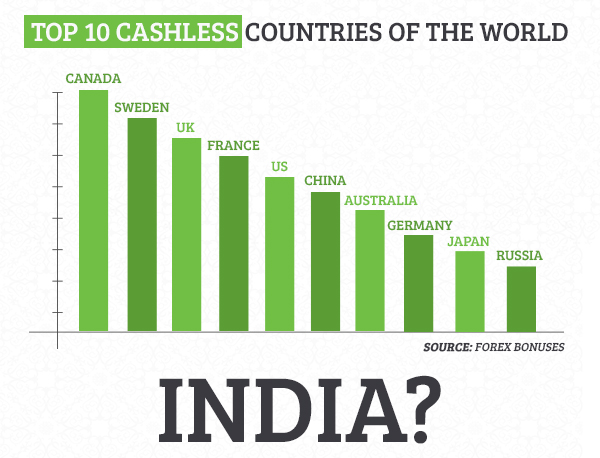
China is a pioneer in cashless transactions, propelled by Alibaba's Alipay and Tencent's WeChat Pay. According to the article's forecast, around 60 percent of China's 1.3 billion population will have made a purchase via mobile payment by 2023.The UK is still 'far from being a cashless society'
“Our analysis shows the UK is far from being a cashless society, as mostly older generations continue to use ATMs frequently, whereas younger people living in London are the most likely to go out with a thinner wallet.”
We are moving into a society that is predominantly digital and cashless, but we're not ready for an environment where there is no cash. There are several sections of society today that are not digitally native and don't have access to infrastructure that enables them to be completely digital.
Cashless societies have existed from the time when human society came into existence, based on barter and other methods of exchange, and cashless transactions have also become possible in modern times using credit cards, debit cards, mobile payments, and digital currencies such as bitcoin.
Will India ever become cashless
But while the quantum of cashless transactions made through payment portals, and UPI-linked systems has increased considerably, India is nowhere close to becoming cashless.The Japanese government is preparing to introduce a system for companies to pay salaries digitally – without going through bank accounts – by spring 2023.Since the late 20th century, India has been slowly but steadily moving towards cashless economy with ATMS, MICR, debit cards, credit cards. Today, you have mobile wallets, recharge vouchers, UPI, NFC payments, QR codes etc.
Debit cards and electronic transfers are replacing physical money, leading to a system where governments, banks, businesses, and people transfer funds by having a third party change numbers on the equivalent of an electronic ledger.
Why is India going cashless
The basis for this was always working towards a 'cashless society' and we zoomed ahead towards that goal during a global health catastrophe – Covid-19. The pandemic which brought about social distancing, lockdowns and a hyper-dependency on digital media and digital payments.Ultimately, cash may in fact disappear. But it's mostly a question of where and when. While it may disappear in some countries, it might remain in others. And if it ultimately happens in 50 or 100 or more years, it won't matter much to anyone who's alive today.Ultimately, cash may in fact disappear. But it's mostly a question of where and when. While it may disappear in some countries, it might remain in others. And if it ultimately happens in 50 or 100 or more years, it won't matter much to anyone who's alive today.
RBI Limitations: The Indian Government
4 The Reserve Bank has the right to print currency up to 10,000 rupee notes. However, if the Reserve Bank wants to print anything higher, the government must amend the Reserve Bank of India Act.
Since the late 20th century, India has been slowly but steadily moving towards cashless economy with ATMS, MICR, debit cards, credit cards. Today, you have mobile wallets, recharge vouchers, UPI, NFC payments, QR codes etc.
The Swiss franc
What is the safest currency in the world The Swiss franc (CHF) is generally considered to be the safest currency in the world and many investors consider it to be a safe-haven asset. This is due to the neutrality of the Swiss nation, along with its strong monetary policies and low debt levels.
Why should the US not go cashless
There are many reasons experts list in arguing that cash must remain a viable payment option: Going cashless excludes the millions of unbanked and underbanked people in America, most of whom are people of color; cash is the best way to pay while maintaining a modicum of privacy; cash is integral to many cultural …The Union government headed by PM Narendra Modi has moving towards realizing his vision for cashless India. Ever since demonetization of the old currency notes of Rs 500 and 1000, which was announced by it on November 8, 2016.Canada is one of the leading countries when it comes to going cashless. ”The reason why we accept tap and go, and mobile pay … is because that's where the consumer market is going,” Yong told Global's The New Reality.